What a Truck Unloader Conveyor Does—and Why It Matters Now
A truck unloader conveyor is purpose-built to bridge the gap between a vehicle’s cargo area and a facility’s inbound line, enabling workers to move parcels, cartons, totes, and bagged goods from trailers and containers directly into sorting or storage with minimal manual handling. In fast-growing sectors like express delivery, e-commerce fulfillment, cross-border logistics, and omnichannel retail, this simple idea transforms dock operations. By positioning the conveyor at the vehicle door and extending into the load space—often with telescopic, articulating, or mobile frames—the system reduces time spent walking, bending, and hoisting, while increasing throughput and consistency.
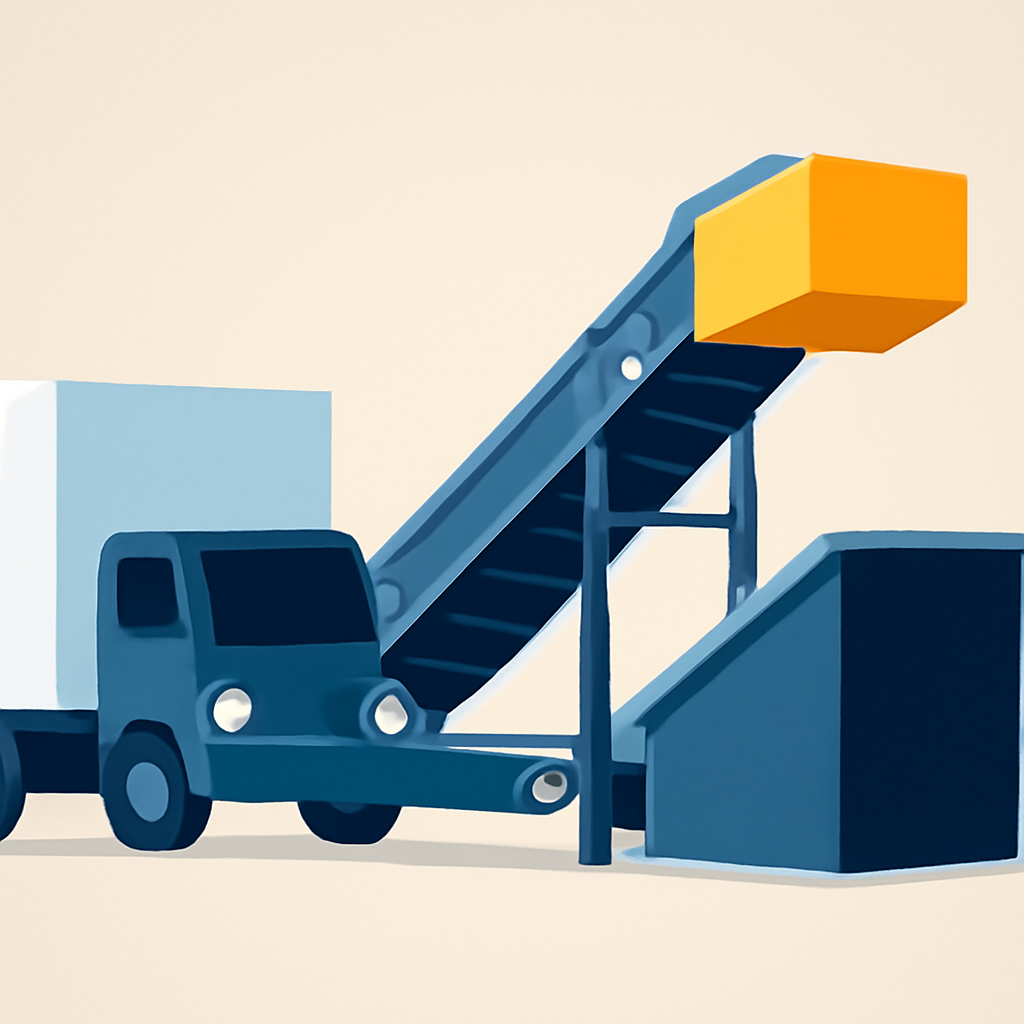
Modern designs typically combine a durable belt or roller surface with powered traction, variable-speed drives, and ergonomic features. Telescopic belt models can extend multiple stages into a 40-foot container, while flexible or skate-wheel versions can snake around tight spaces. Core components include the conveyor surface (belt or rollers), drive units, intuitive controls, and safety features such as e-stops, anti-collision sensors, side guards, and lighting. Optional add-ons elevate performance: auto-indexing that advances the boom as the vehicle empties, height-adjustable nose sections, operator ride-on platforms, and integrated scan/weigh/dimension (SWD) modules that feed data to warehouse software in real time.
The operational gains are measurable. Facilities often see 25–50% faster unloading cycles when transitioning from manual or gravity roller methods to powered solutions. Ergonomics improve markedly as the conveyor brings the package flow to the worker rather than forcing the worker to handle long reaches or awkward postures. That change translates into fewer strain-related incidents and steadier productivity across shifts. In busy gateways—think Pearl River Delta cross-border corridors or coastal import hubs—those minutes shaved per trailer compound into hours saved each day, unlocking earlier sort cutoffs and tighter delivery windows.
Importantly, a truck unloader is not a one-size-fits-all device. Facilities moving mixed SKUs (from poly-mailers to heavy cartons) need belt widths, structural rigidity, and motor horsepower that match their heaviest use case. Meanwhile, space-constrained docks may favor mobile units that roll between doors, or compact frames with reduced turning radius. For teams evaluating options, explore product lines where a single platform can be tailored by stage count, length, and accessories. To see an example of configurable systems designed for high-velocity logistics, browse truck unloader conveyor solutions that integrate seamlessly with upstream sortation and downstream storage.
Key Specifications, Options, and a Practical Buying Checklist
Choosing the right truck unloader conveyor begins with clear performance targets. Start by quantifying inbound volume and variability: peak cartons per hour, package dimensions and weights, and the mix of vehicles (box trucks, 53-foot trailers, 20/40-foot containers, curtain-siders). From there, match specifications to needs:
– Belt or roller type: Belt conveyors handle small or soft packages reliably, while rollers suit rigid cartons. Anti-slip, wear-resistant belts minimize jams and reduce maintenance. Consider belt width relative to the largest carton and desired side-clearances for safe handling.
– Length and telescopic stages: More stages allow deeper reach into long vehicles, reducing walking and repositioning. Confirm dock-to-trailer heights and specify an adjustable nose to align with variable floor levels and pallet stacks.
– Speed and control: Variable-frequency drives (VFDs) provide smooth starts, adaptable speeds, and energy savings. Look for soft-start/stop, jog functions, and programmable acceleration to protect fragile goods and improve ergonomics.
– Load rating and duty cycle: Continuous, high-throughput operations demand industrial-duty motors, reinforced frames, and high-quality bearings. If running multiple shifts, verify thermal protection and service intervals suited to the workload.
– Safety and visibility: E-stops at nose and rear, photoelectric sensors, anti-pinch guards, non-slip decking, and integrated LED lighting are essential. Clear line markings and audible alerts support standardized work and safe movement in crowded docks.
Integration and data matter as much as mechanics. For high-velocity inbound lines, scanners, scales, and dimensioners placed at the conveyor nose or transfer point can automatically register SKU data to WMS or TMS systems. That enables instant exception handling and route optimization. Power and data routing should be planned early, including cable management and Wi-Fi coverage in and around the dock. For facilities in dense logistics regions—such as Guangdong and other manufacturing corridors—connectivity ensures a seamless handoff from unloading to cross-docking or sortation.
Assess ROI using a blend of labor savings, cycle-time reduction, injury avoidance, and earlier cutoffs that increase on-time dispatch. A typical scenario: a site unloading 20 trailers per day at 45 minutes each shifts to powered telescopic units and averages 28 minutes per trailer. That’s nearly six hours saved per day—time that can be reallocated to processing late arrivals or tightening dispatch windows. Add in reduced overtime and fewer ergonomic incidents, and the payback often falls within 6–18 months, depending on volume. Finally, prioritize maintainability: easy belt tracking, quick-change wear parts, accessible grease points, and on-screen diagnostics minimize downtime and keep your truck unloader running through peak season.
Implementation, Safety, and Maintenance Best Practices from the Dock Floor
Strong results begin with a disciplined site survey. Map dock geometry, bumper offsets, and ceiling clearances; confirm floor load ratings for mobile units; and verify the turning radius required to service multiple doors. If integrating with a pit or fixed dock leveler, check nose heights and consider articulating fronts that can rise over pallet lips or uneven container floors. Plan the equipment approach path so operators can deploy the conveyor without blocking forklift aisles or fire egress. Where space is tight, designate painted lanes and install bollards to prevent collisions.
Installation and commissioning should be structured around standard work. Align conveyors with inbound lines, test telescopic extension/retraction under load, and tune VFD parameters for smooth handling. Introduce a short, hands-on operator certification that covers safe start-up, speed control, emergency stops, and housekeeping at the dock. Reinforce 5S practices—keep the nose clear of debris, secure handheld scanners and cables, and stage dunnage bins within reach. Periodic refresher training ensures seasonal staff follow the same routines as core teams.
Safety is non-negotiable. Equip every truck unloader conveyor with redundant e-stops, light or proximity curtains at pinch zones, and anti-collision safeguards that halt motion when objects are detected at the nose. Use non-slip platforms, handrails on ride-on sections, and task lighting inside trailers or containers. Establish a lockout/tagout (LOTO) procedure for maintenance, and conduct pre-shift inspections: check belt tracking, look for frayed cables, verify guard integrity, and test alarms. A simple daily checklist can prevent small issues from escalating into unplanned downtime.
Preventive maintenance sustains performance through peak volumes. Follow a cadence of weekly visual inspections, monthly lubrication and roller checks, quarterly belt tension/track adjustments, and annual motor and gearbox assessments. Keep a spare parts kit with belts, bearings, sensors, and control fuses to minimize MTTR. Energy efficiency can be enhanced via auto-idle modes, right-sized motors, and VFD tuning; over time, that lowers operating cost per handled unit. Consider data logging: tracking cycle counts, run hours, and stop causes helps maintenance teams prioritize interventions and forecast wear. Real-world results often include cycle-time reductions from 30 to 18 minutes per 40-foot container, 30–40% fewer manual touches, and substantial drops in product scuffs or corner crush. In high-density logistics networks handling cross-border freight, these gains ripple through the entire operation—enabling earlier sort starts, more predictable dispatches, and a consistently better customer promise anchored by a reliable, high-throughput truck unloader at every dock.

Madrid-bred but perennially nomadic, Diego has reviewed avant-garde jazz in New Orleans, volunteered on organic farms in Laos, and broken down quantum-computing patents for lay readers. He keeps a 35 mm camera around his neck and a notebook full of dad jokes in his pocket.